
When people come over and see my tarantulas for the first time, they almost always react the same way: first a shocked 'Oh my God!', and then a curious 'Wow, these are cool!'. That’s exactly why I’ve been fascinated by them for so long – they’re this unique mix of respect and beauty.
They flick their hairs
They are not monsters, as they are sometimes described. Movies, myths, and exaggerations have led people to avoid them and fear them. In reality, they are usually calm, reserved animals that prefer to keep their distance from humans. Their threat displays – raised front legs, an upright body – may look impressive, but they are primarily a way of saying, “Stay away from me.”
My tarantulas belong to the so-called “bombardier” species. These are types that, when threatened, can flick the tiny urticating hairs from their abdomen. A small but extremely effective defense system that protects them from predators in the wild.
With strong movements of their hind legs, they send whole clouds of tiny hairs into the air. These hairs can stick to the skin, cause itching or a burning sensation, and are especially unpleasant if they get into the eyes.
For me as a keeper, this means: handle them carefully in the terrarium – and always show respect for the animal.

Keeping and setup
A species-appropriate terrarium is essential. Bombardier tarantulas are mostly ground-dwelling.
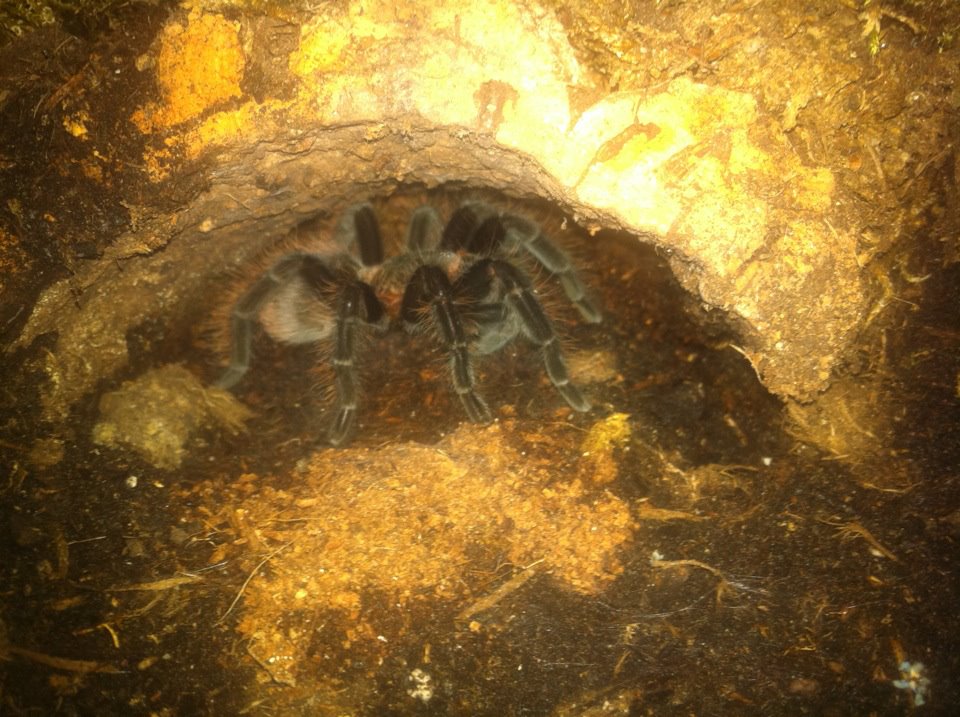
A shelter, such as a cork tube or a self-dug burrow, is almost always accepted. Other important aspects include:
- The right climate: Different species require different temperature and humidity ranges.
- Peace and quiet: Loud noises and vibrations stress the animals.
- Food: Crickets, cockroaches, or grasshoppers are more than enough – and watching them hunt is a real highlight.
Despite their defense mechanisms, my bombardier tarantulas are surprisingly calm animals. Most of the day they stay in their hides or at the entrance to their burrows. They only become active in the evening to hunt. Watching them is always fascinating: how they snap shut in a flash, secure their prey, and then consume it calmly. Yes, and for that, they use their powerful fangs – that’s right, venom! The venom paralyzes the prey within seconds to minutes.
At the same time, it begins to break down the internal organs and tissues.
The spider can then suck up the liquefied food – similar to drinking through a straw.
The molting of my spiders
When one of my spiders is getting ready to molt, I can usually tell days in advance: it withdraws, stops eating, and often lies motionless in its burrow or on its spot. To an outsider, this can sometimes look worrying – but for me, it’s a sure sign: a molt is about to happen.
The actual process is incredible:
The spider usually lies on its back or on its side.
Then it tears open the old skin at the carapace (the upper back shell).
Piece by piece, it works its way out of the old skin – legs, fangs, even the fine hairs.
The whole process can take anywhere from minutes to several hours. Afterward, lying next to the spider is a perfect “copy” of its body!
For me, this means: complete peace, no feeding, no disturbances. Only after a few days to weeks is the spider completely “itself” again.
Variety of species
They are beautiful creatures that create a special atmosphere in the terrarium.
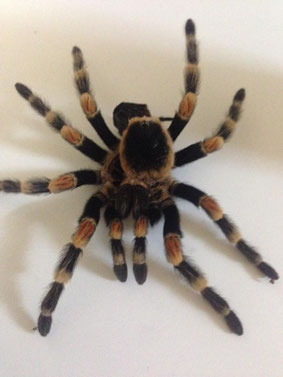
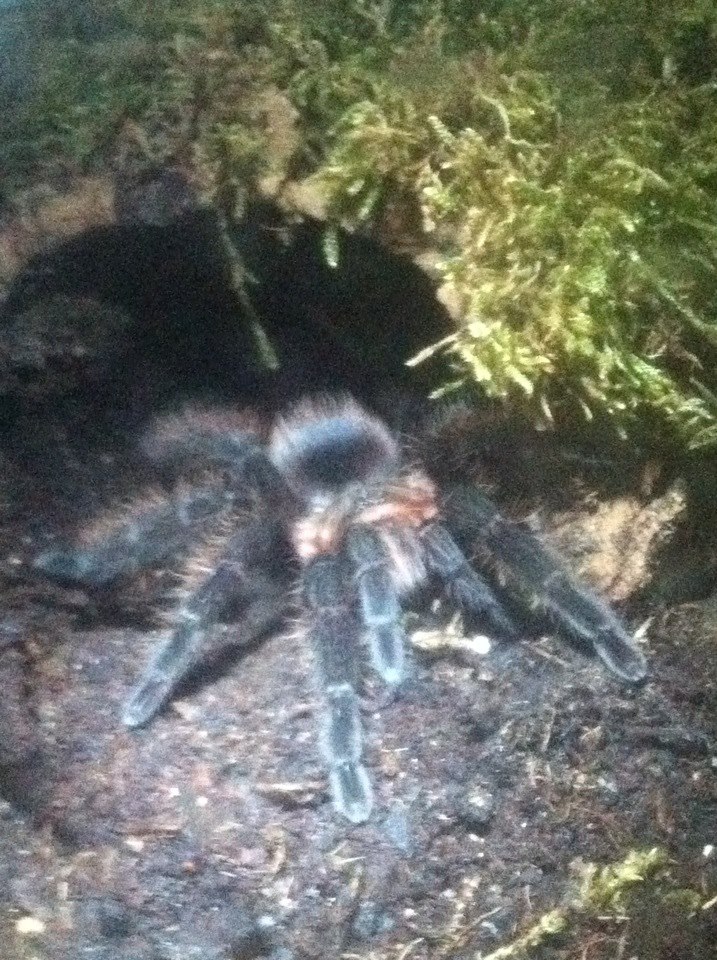
- Grammostola vagans (Mexican Redleg Tarantula): Typical features include a black body, velvety texture, and a reddish-brown “brush” on the abdomen.
- Brachypelma hamorii or Brachypelma smithi (Mexican Redknee): This species is one of the best-known tarantulas – sturdy, colorful, and relatively calm.
- Grammostola porteri or Grammostola rosea – the well-known Chilean tarantulas.
To name just a few…


Respect, not fear!
For me, my bombardier tarantulas are fascinating animals that deserve respect. Their defense strategy may seem intimidating, but it’s really just a clever protective mechanism. With proper care
and careful handling, they reveal their true nature: calm, beautiful creatures that bring a piece of nature into your home.
It’s always an experience: as soon as the neighborhood kids hear that I keep tarantulas, they are eager to take a peek into the terrariums. Their eyes light up, and they press curiously against the glass – without fear, and full of fascination!
Ich bin Supporterin und Moderatorin des Radiosenders "German Starship Troopers"
Reinhören und genießen.


Entdecken Sie die zauberhafte Welt von Konrad Welzel – liebevoll erzählt für kleine Entdecker und Träumer. Seine Geschichten rund um
„Die kleine Schildkröte Lina“, „Die kleine Ballerina Maila“ und "Die rote Giraffe Juna" entführen Kinder ab 3 Jahren in bunte Szenarien voller Mut, Freundschaft und Fantasie.
Jetzt bei Amazon stöbern und die perfekte Vorlesezeit erleben!
